


How to prioritise your workflow
So little time so much to do (*90’s kid breaks into song*). That’s a niche reference but being really busy, not knowing where to start and being less productive is very, very mainstream.
At Team PARW we constantly look at problems we need to overcome and go to our ‘toolbox’. This article explores the problem of prioritisation from a business perspective, but please feel free to apply it to your life in general too, we certainly do. For this issue we like to use the Eisenhower Matrix (Figure 1).
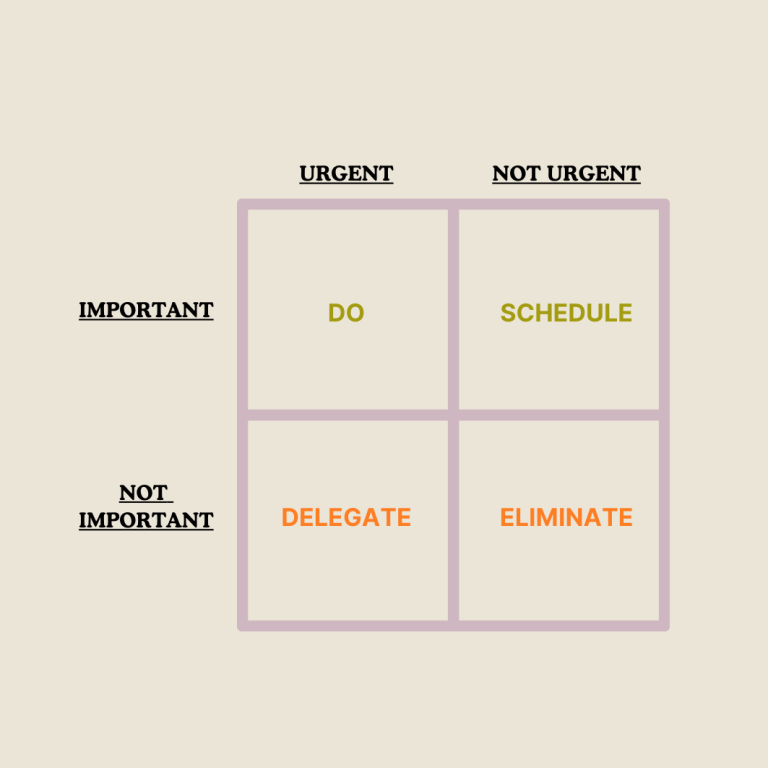
Figure 1: The Eisenhower Matrix
You may have seen this before, but we guarantee if you’re having those prioritisation problems, leading to procrastination – you’re not quite applying it correctly, if at all.
Firstly let’s explain a key feature of the model – the difference between urgency and importance. Urgency is related to time, when does that particular task need to be completed by. Importance is related to the tasks alignment with your goals, value and vision. The understanding of this definition allows you to use the model effectively – when do I need this task to be done by and does it contribute towards my success?
So where should you be operating?
We want to be spending as much time as we can in the top right – important, not urgent. In this sector, you’re completing important tasks and dedicating the time and energy that they deserve, productive and successful people will operate in this space.
The top left is sometimes unavoidable, important and urgent tasks come up outside of our control. Sometimes it’s our fault as we’ve avoided something but either way these tasks will need to be completed, they are important after all – so time being allocated to them is completely acceptable. What we can find as busy people or ‘firefighters’ is that everything is deemed to be urgent and important, this is poor prioritisation. Stepping back and spending time categorising tasks will help you foresee these ‘unavoidable’ tasks arising earlier and assign time to them before their urgency builds.
This leads us to delegation, bottom left. As high performing individuals this can be hard. ‘They won’t do it as well as me’, nope, maybe not, but it’s not important so spend your valuable time highly performing elsewhere!
Not urgent, not important – sounds easy to just get rid of (and you should), but this is about learning to say no, delivering effective messages that you don’t have the time, over time, will stop these tasks from creeping on to your list.
Where to start?
Where to start? This is the critical question many of us grapple with in the midst of our hectic schedules. The key is to begin with self-reflection and a thorough assessment of your current tasks. This involves categorising each task using the Eisenhower Matrix. Ask yourself, “Is this task important for my long-term goals? Is it urgent?” These questions will guide you in prioritising your tasks effectively.
Once you’ve categorised your tasks, focus on planning. Effective planning involves not just listing tasks but also allocating specific time slots for each. This method is often referred to as time-blocking. By assigning a specific duration to each task, you prevent tasks from expanding to fill available time, a phenomenon known as Parkinson’s Law.
Another crucial aspect is flexibility. While it’s important to have a structured plan, being too rigid can lead to frustration. Life is unpredictable, and new tasks or emergencies can arise. High-performing individuals adapt quickly, reshuffling their priorities while maintaining focus on their goals.
Monitoring your progress is also essential. Regularly review the tasks you’ve completed and those still pending. This not only provides a sense of accomplishment but also helps you identify patterns in your productivity. Perhaps certain tasks consistently end up in the urgent and important quadrant because they’re not being addressed early enough.
Incorporating technology can be a game-changer. Utilize productivity apps that align with the Eisenhower Matrix. These apps can help you keep track of your tasks, remind you of deadlines, and even suggest optimal times for tackling specific types of work.
Lastly, remember that productivity is not just about getting things done; it’s also about ensuring you’re working on the right things. Regularly revisit your goals and values to ensure that your tasks align with them. This alignment is what transforms mere busyness into true productivity.
Mastering the art of prioritisation is an ongoing journey. It requires continual adjustment and a willingness to learn from each day’s successes and failures. By effectively using tools like the Eisenhower Matrix and embracing a flexible, goal-oriented approach, you can transform your overwhelming to-do list into a manageable, strategically-focused roadmap, leading not just to increased productivity, but also to greater personal and professional fulfilment.